
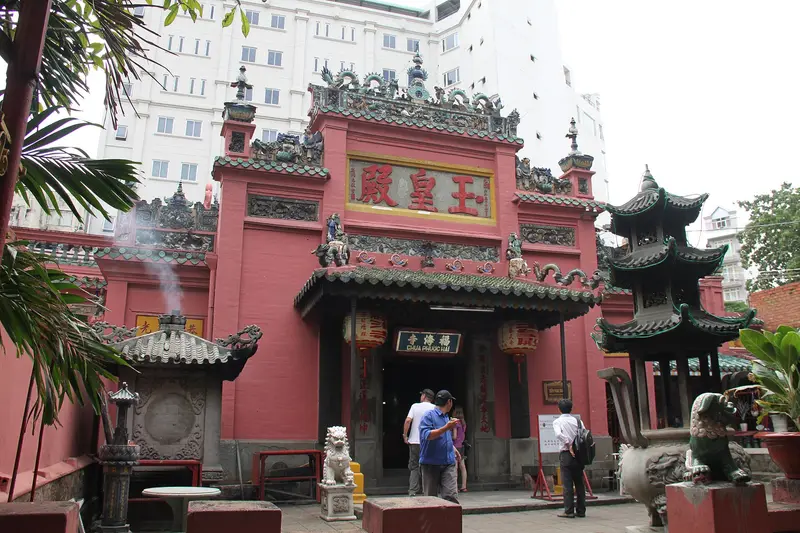
- Temples
- Cover shoulders and knees
- Shoes
- Off when you see shoes at the door
- Tipping
- Not traditional; appreciated in service jobs
- Bargaining
- Normal at markets, not in fixed-price shops
- Gifts
- Give and receive with both hands
- Tết greeting
- Chúc mừng năm mới (Happy New Year)
Ho Chi Minh City is easy-going, commercial and used to foreigners, and few people will expect you to know the finer points of Vietnamese etiquette. What matters most is warmth, patience and respect: greet people, dress modestly at religious sites, never shout, and keep disagreements calm so nobody loses face.
This page covers the everyday customs that come up most — greetings, temples, homes, tipping, bargaining, gifts and Tết — plus a few legal and social lines you should not cross.
Greetings and names
- A smile and xin chào works everywhere; with older people add a slight nod. Handshakes are common in business, often with both hands or a light grip; let a Vietnamese woman offer her hand first.
- Age matters. Vietnamese choose words by relative age (anh, chị, em, cô, chú). Being asked your age or marital status early on is normal, not nosy; it helps people address you correctly. See Vietnamese phrases.
- Names: Vietnamese names run family name first, given name last (Nguyễn Văn An is ‘Mr An’). People are called by their given name, with a title: anh An, chị Lan.
- Business cards are given and received with both hands; read them before putting them away.
Temples, pagodas and churches
- Cover shoulders and knees at religious and cultural sites; the UK Foreign Office advises this too. Carry a light scarf.
- Take your shoes off where others do, usually before stepping onto a raised floor or mat.
- Don’t point your feet at altars or statues, climb on statues, or touch monks (women in particular should not touch monks or hand them things directly).
- Speak quietly, don’t walk in front of people praying, and ask before photographing worshippers or monks.
- Small donations in the box are welcome. See pagodas and temples.
In someone’s home
- Take shoes off at the door if you see shoes there.
- Bring a small gift: fruit, sweets, tea or something from your country. Avoid giving sharp objects (they suggest cutting ties).
- Wait to be shown where to sit; the eldest is served first and starts eating first.
- Don’t leave chopsticks standing upright in rice (it resembles incense at a funeral) and don’t tap them on the bowl.
- When drinking, expect toasts: một, hai, ba, dô! Pour for others before yourself.
Tipping
Tipping is not a traditional custom in Vietnam, but it is now common in tourist-facing and service jobs, and wages are low. A practical guide:
- Street food and local cafés: no tip expected; leaving small change is fine.
- Restaurants: check the bill for a service charge (often in upmarket places). If none, leaving 5–10% or rounding up is appreciated.
- Grab and taxis: round up or tip in the app for good service.
- Spas and massage: a tip is customary; some spas suggest an amount.
- Tour guides and drivers on day trips: tip if you were happy.
- Hotels: small tips for porters and housekeeping are welcome.
Give tips discreetly, ideally in đồng. See money.
Bargaining
- Bargain at markets (Bến Thành, Bình Tây; see shopping), with street vendors and for unmetered rides. Don’t bargain in malls, supermarkets, chain stores or places with printed prices.
- Ask the price first (bao nhiêu?), counter politely, and smile. Walking away is the strongest move.
- Only bargain if you intend to buy, and once you agree a price, pay it.
- For cyclos and photo-with-props sellers, agree the full price in advance; see safety and scams.
Dress and public behaviour
- Saigon dress is casual, but beachwear belongs at the beach. Smart casual is expected in offices, upmarket restaurants and government offices.
- Public displays of affection are milder than in the West.
- Keep your cool. Raising your voice or publicly criticising someone causes loss of face for both sides and rarely gets results. Calm persistence works better.
- Queues are looser than you may be used to; be patient but firm.
- Vapes are illegal in Vietnam; smoking is banned in many indoor public places.
Gifts
- Give and receive gifts with both hands. Gifts are often not opened in front of the giver.
- Wrap in red or gold for good luck; avoid black or white wrapping, which is associated with funerals.
- Good gifts: fruit baskets, good tea, sweets, wine or spirits for men (in business), quality items from your home country.
- For business partners, chambers of commerce can advise on norms; see work and business.
Tết etiquette
The Lunar New Year is the most important time of year. If you are invited to a home during Tết:
- Greet with Chúc mừng năm mới (Happy New Year).
- Bring a gift (fruit, sweets, tea) and, if there are children, give lì xì: crisp new notes in a red envelope. Small amounts are fine; it is the luck that counts.
- Avoid arguments, sweeping, and talking about bad luck or death in the first days of the year.
- The first visitor to a home after midnight (xông đất) is believed to set the family’s luck; don’t be the first unless invited.
More on what is open and closed in Tết in Saigon.
Photography and sensitive topics
- Ask before photographing people, especially at markets, temples and in homes. A smile and a gesture at your camera usually works; respect a no.
- Photographing military sites is restricted.
- Politics and history: Vietnamese views of the war and of 30 April 1975 are complex and personal. Listen more than you talk, avoid political criticism in public or online (it can have legal consequences in Vietnam), and don’t take part in protests.
- Many people still call the city Saigon in daily life, especially for the central districts; ‘Ho Chi Minh City’ is the official name. Either is fine in conversation.
Frequently asked questions
Do you tip in Ho Chi Minh City?
It is not a traditional custom, but tipping is common and appreciated in restaurants without a service charge, spas, tours and with drivers. Street food vendors don’t expect tips.
What should I wear to temples in Saigon?
Cover your shoulders and knees, and take your shoes off where others do.
Is bargaining rude in Vietnam?
No, it is expected at markets and with street vendors. Keep it friendly and only bargain if you mean to buy. Don’t bargain in shops with fixed prices.
What do you give at Tết?
Gifts such as fruit, tea or sweets for the household, and lì xì (lucky money in red envelopes) for children.
Should I say Saigon or Ho Chi Minh City?
Ho Chi Minh City is the official name; Saigon is still used widely in everyday speech, especially for the centre. Either is fine in conversation.